Do you hit an invisible wall of exhaustion every afternoon around 2:00 PM?
You find yourself unfocused at your desk, fighting heavy eyelids, and reaching for a third cup of coffee, a sugary snack, or an energy drink just to push through the workday.
While caffeine provides a temporary illusion of alertness by blocking adenosine receptors in your brain, it does not actually create energy. In fact, relying on caffeine spikes cortisol and destabilizes blood sugar, almost guaranteeing a sharper crash an hour later.
In modern nutritional science, chronic afternoon fatigue is frequently tied to cellular nutrient depletion—most notably, Vitamin B12. Here is the biological breakdown of how Vitamin B12 produces true cellular stamina, why so many people are subtly deficient, and how to conquer the afternoon slump naturally.
—
## 1. How Vitamin B12 Creates Real Energy (Cellular ATP)
Unlike stimulants that force your adrenal glands to work overtime, Vitamin B12 (Cobalamin) is a fundamental biochemical co-factor required inside your mitochondria:
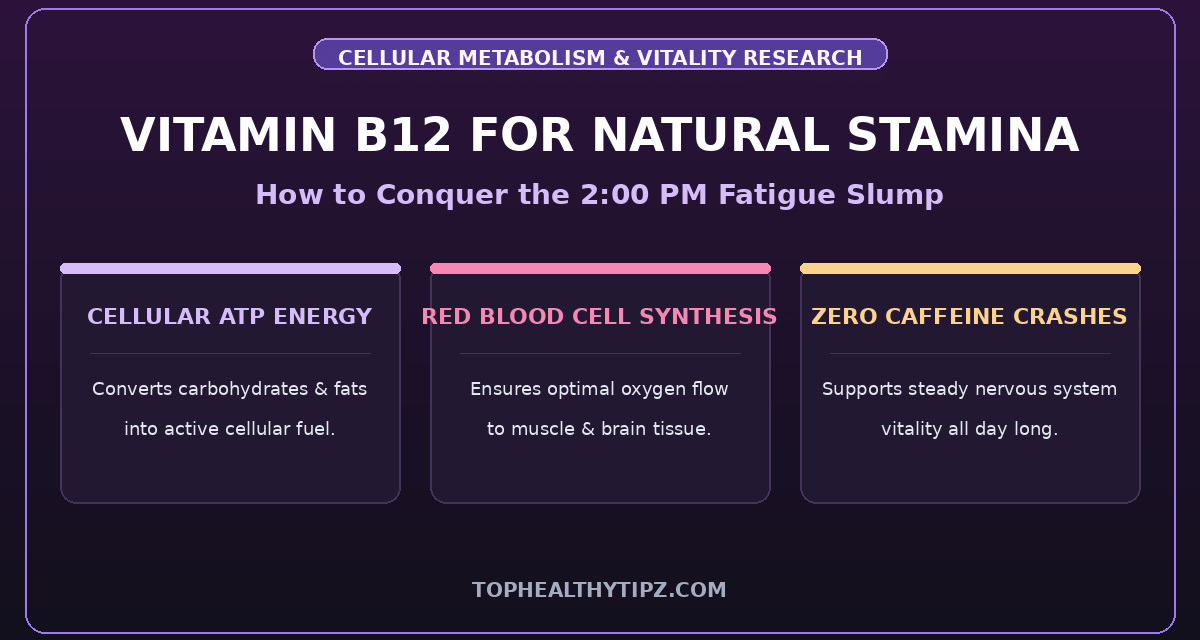
* **ATP Production:** Vitamin B12 is essential for the cellular conversion of carbohydrates, dietary fats, and proteins into Adenosine Triphosphate (ATP)—the body’s fundamental currency of cellular energy.
* **Red Blood Cell Synthesis:** B12 works directly with Folate to form healthy, oxygen-carrying red blood cells. Without sufficient active B12, red blood cells become oversized and inefficient, resulting in sluggish tissue oxygenation and constant physical fatigue.
* **Nervous System & Myelin Sheath:** It protects the delicate fatty coating (myelin) surrounding your nerve fibers, ensuring rapid neural signaling and preventing brain fog.
—
## 2. The Caffeine Trap: Why Coffee Can’t Fix Nutrient Depletion
When you feel exhausted at 2:00 PM, your cells are often crying out for hydration and metabolic co-factors—not central nervous system stimulants.
Consuming high doses of caffeine when already depleted causes vasoconstriction, elevates stress hormones, and accelerates urinary excretion of water-soluble B-vitamins. Transitioning to active B-vitamin support allows your body to generate sustained, baseline metabolic energy without tremors, heart palpitations, or bedtime insomnia.
—
## 3. Who Needs B12 Supplementation Most?
Vitamin B12 absorption requires strong stomach acid and an enzyme called “intrinsic factor.” Common factors that compromise daily B12 uptake include:
* **Plant-Based / Vegetarian Diets:** Vitamin B12 naturally occurs almost exclusively in animal foods.
* **Digestive Stress:** Low stomach acid or gut inflammation significantly reduces dietary absorption.
* **Daily Stress & Work Fatigue:** High cognitive stress rapidly increases the metabolic turnover of all B-complex vitamins.
—
## 4. Optimal Timing: How to Take Vitamin B12
* **Take in the Morning or with Lunch:** Because B-vitamins stimulate natural energy production, take your dose early in the day so it does not interfere with deep nighttime sleep.
* **Pair with a Light Meal:** Improves digestive breakdown and ensures seamless nutrient uptake into the bloodstream.
⚡ Recommended: Daily B-Vitamin & Energy Multi-Support
Adult daily multivitamin chewables formulated with full daily values of Vitamin B12, B6, Vitamin C, and essential micronutrients to fuel cellular ATP metabolism and conquer afternoon fatigue without artificial stimulants.
🎁 Free Download: 2026 Autumn & Winter Supplement Protocol
Learn the exact timing schedule to pair Vitamin B12 with seasonal nutrients. Download our 7-day food-pairing roadmap to beat midday fatigue.